Faculty and student research currently focuses on the following areas and topics (also see the Publications list):
- Civilian victimization during conflict
- Civil-military relations and coups d’etat in Africa
- Congressional-executive relations in U.S. foreign policy
- Natural resource conflicts
- Religious insurgencies and conflict dynamics
- Separatist and irredentist ethnic conflicts
- Transatlantic security and US foreign policy
Core Faculty
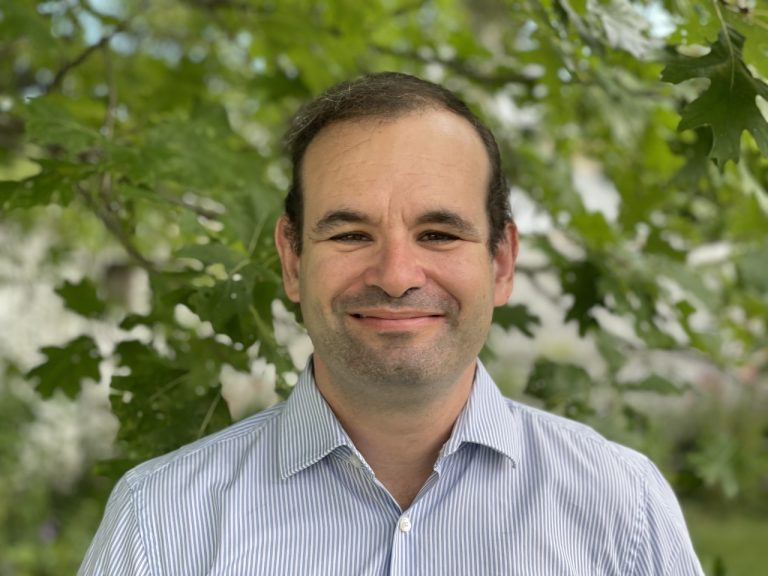
Sebastian Elischer is an associate professor in the Department of Political Science. His work examines statehood, democracy, and conflict in sub-Saharan Africa. He has published two monographs on these topics with Cambridge University Press. His 2021 book Salafism and Political Order was named as one of the best books in African politics by Foreign Affairs. His article publications have appeared in Comparative Politics, African Affairs, Review of African Political Economy and similar journals. During the 2021-2022 academic year Elischer was a research fellow at the Kellogg Institute for International Studies at the University of Notre Dame. He has provided expert advice and testimony to the Department of Defense and several government agencies in Europe.

Patrick Hulme is Assistant Professor at the University of Florida’s Hamilton School. Hulme is a political scientist, with a focus on congressional-executive relations in U.S. Foreign Policy. He has previously served as a fellow at Stanford’s Center for International Security and Cooperation and at the Harvard Kennedy School’s Belfer Center. His research and teaching interests include congressional-executive relations in U.S. foreign policy, constitutional law, deterrence theory, and the U.S.-China relationship.

Rebecca Hanson is Associate Professor in the Department of Sociology, Criminology & Law and Center for Latin American Studies at the University of Florida, founder and co-director of UF’s International Ethnography Lab, and co-leader of the Venezuela Conflict and Peacebuilding Research Network. Her most recent book is , Policing the Revolution: The Transformation of Coercive Power and Venezuela’s Security Landscape During Chavismo (Oxford University Press 2025)
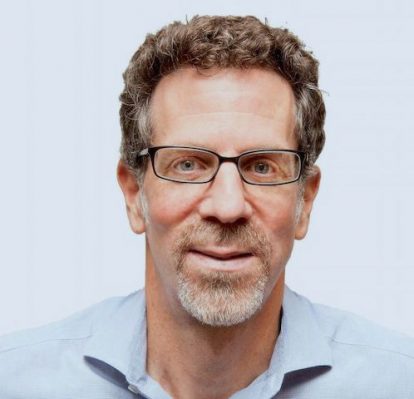
Zach Selden is an Associate Professor of Political Science. His work focuses on American foreign policy, national security, and transatlantic relations. His most recent book is Alignment, Alliance, and American Grand Strategy (University of Michigan Press, 2016). His current work examines how emerging technology in Artificial Intelligence affects state expectations of future conflict. He was previously an analyst with the Congressional Budget Office and Deputy Secretary General of the NATO Parliamentary Assembly.
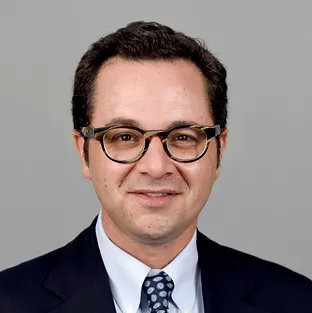
David S. Siroky is Professor of International Relations in the Department of Political Science, Core Faculty of the Florida Institute for National Security, and current Director of the Violence, Conflict and Security Lab. His research has appeared in more than forty articles in leading scholarly journals and in Defection Denied: A Study of Civilian Support for Insurgency in Irregular War (Cambridge University Press, 2022), which analyzes the nature and sources of civilian support for militant groups during wartime utilizing unobtrusive survey experiments. His most recent book is Clients, Rivals, and Rogues: Why Great Powers Intervene in Revolutionary Civil Wars (Cambridge University Press).
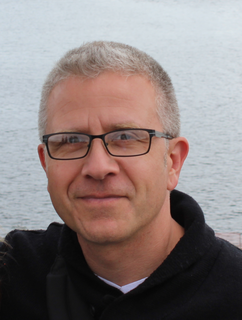
Ben Smith is Professor and Chair of Political Science and Director of the Center for Global Islamic Studies. His current research and teaching focus on the politics of resource wealth, on ethnic and nationalist mobilization, and on civil wars. His first book, Hard Times in the Lands of Plenty, was published in 2007 by Cornell University Press. His second book, co-authored with David Waldner, Rethinking the Resource Curse, was published in 2021 by Cambridge University Press. He teaches graduate and undergraduate courses on Civil Wars, Ethnic Conflict, Oil in Global Politics, and Politics Under Authoritarianism.

Dr. Olivier Walther is an Associate Professor of Geography at the University of Florida. His research focuses on cross-border trade and transnational political violence in Africa. Dr. Walther is the lead editor of the “Routledge Handbook of African Borderlands” (2026) and coeditor of “African Border Disorders. Addressing Transnational Extremist Organizations” (2016). He has served as a principal investigator or collaborator on externally funded research projects from the National Science Foundation, NASA, the U.S. Department of State, the United Nations, and the OECD. He is an Associate Editor ofPolitical Geography and serves on the executive committee of the African Borderlands Research Network and of the Association for Borderlands Studies.
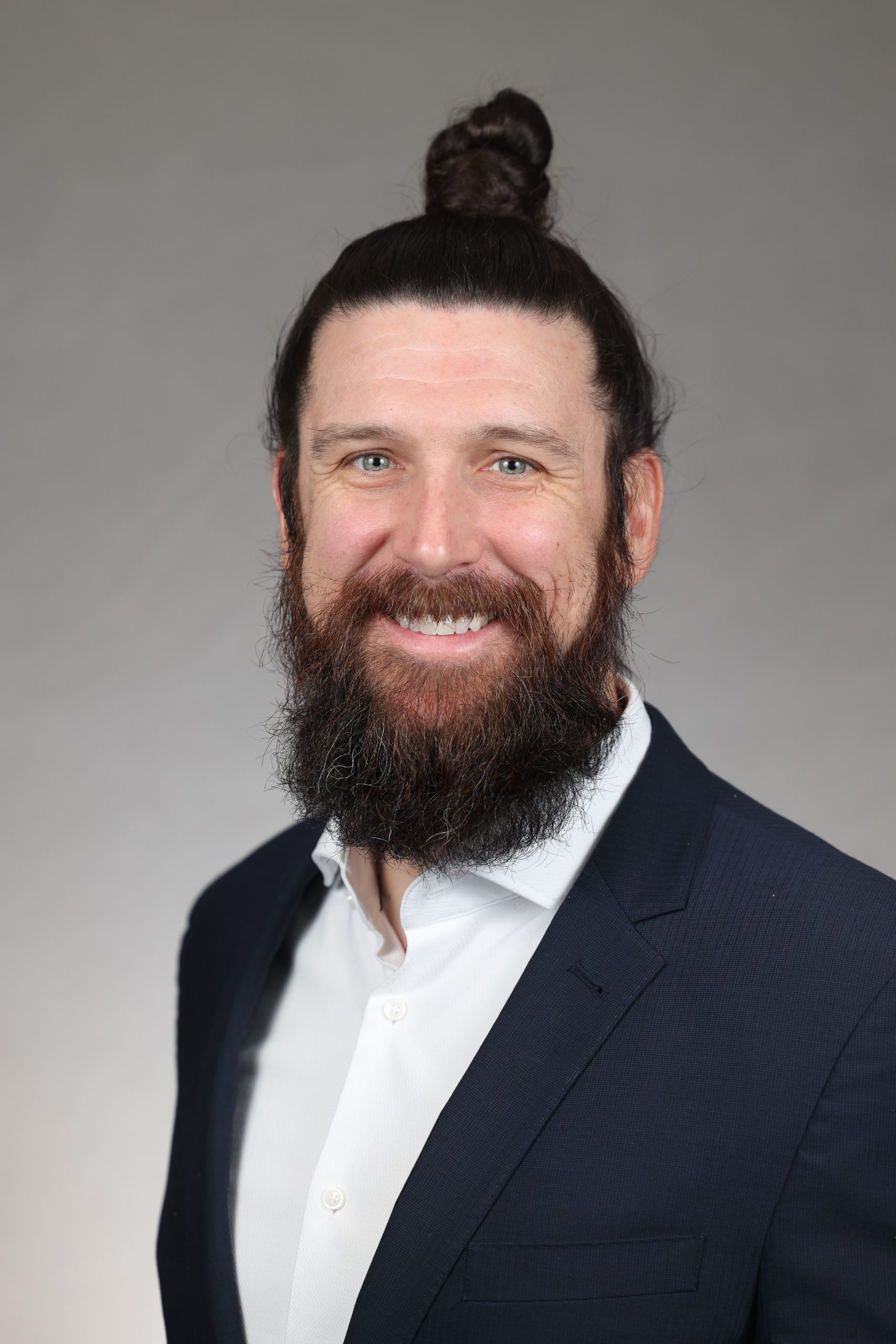
Ryan Welch is an Assistant Professor of Political Science at the University of Florida. His research examines political violence, state repression, and the institutions that shape governments’ use of coercion. Drawing on theories from international relations and comparative politics, he studies why states employ different forms of repression, how domestic and international institutions constrain abuses of state power, and how these processes can be measured.
His research has appeared in International Studies Quarterly, Journal of Conflict Resolution, Journal of Peace Research, Journal of Human Rights, Conflict Management and Peace Science, and Journal of Global Security Studies. His current research explores how political institutions, bureaucracies, and accountability mechanisms shape state coercion, repression, and political violence. He also examines the implications of emerging technologies and environmental governance for human rights and develops new data resources and computational methods to measure institutions and state behavior.